Introduction
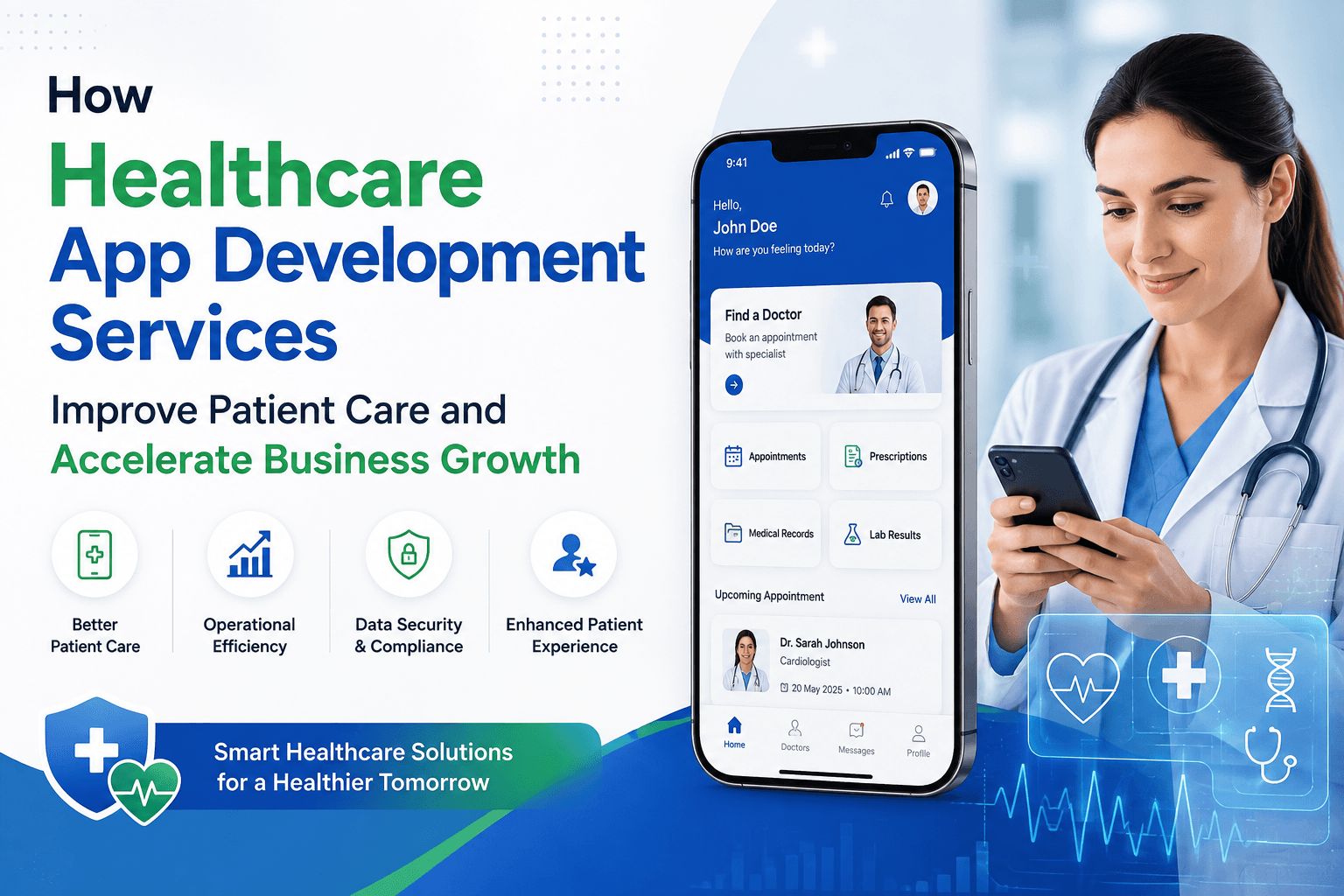
Healthcare is evolving faster than ever, driven by digital innovation and rising patient expectations. Today’s patients want convenient access to medical services, faster communication with healthcare providers, and personalized care—all from their smartphones. As a result, healthcare organizations around the world are investing in digital solutions that improve patient experiences while increasing operational efficiency.
One of the most impactful technologies in this transformation is mobile healthcare applications. Professional healthcare app development services help hospitals, clinics, healthcare startups, and medical organizations build secure, scalable, and feature-rich applications that simplify healthcare delivery and support long-term business growth.
Whether it's a telemedicine platform, a patient engagement app, a hospital management system, or a remote monitoring solution, healthcare applications are reshaping how medical services are delivered. They improve accessibility, strengthen communication, reduce administrative tasks, and create new revenue opportunities for healthcare businesses.
In this article, we'll explore how healthcare app development services enhance patient care, improve operational efficiency, and accelerate business growth in today's competitive healthcare landscape.
What Are Healthcare App Development Services?
Healthcare app development services involve the planning, design, development, testing, deployment, and maintenance of digital healthcare applications. These applications are designed to meet the unique needs of patients, doctors, hospitals, clinics, pharmacies, insurance providers, and healthcare organizations.
Unlike standard mobile applications, healthcare apps require advanced security, seamless integration with healthcare systems, and compliance with industry regulations. Professional development teams focus on creating applications that are both user-friendly and secure while ensuring smooth performance across Android, iOS, and web platforms.
Healthcare app development services can include:
Telemedicine applications
Patient portals
Doctor appointment apps
Hospital management systems
Electronic Health Record (EHR) solutions
Pharmacy applications
Remote patient monitoring platforms
Fitness and wellness applications
Mental health platforms
AI-powered healthcare assistants
These solutions enable healthcare providers to deliver better services while improving efficiency and patient satisfaction.
Why Digital Healthcare Is Growing Rapidly
The healthcare industry has witnessed significant digital adoption over the past few years. Patients increasingly expect healthcare providers to offer online appointment scheduling, virtual consultations, digital prescriptions, and instant access to medical records.
Healthcare organizations are also under pressure to reduce operational costs, improve patient outcomes, and enhance service quality. Mobile applications help achieve these goals by automating routine tasks, reducing paperwork, and enabling real-time communication.
Digital healthcare also makes medical services more accessible for patients living in remote areas or those with limited mobility. This improved accessibility contributes to better health outcomes and stronger patient relationships.
How Healthcare App Development Services Improve Patient Care
1. Easy Access to Healthcare Services
Healthcare applications allow patients to access medical services anytime and anywhere. Instead of waiting in long queues or making repeated phone calls, patients can book appointments, consult doctors online, access prescriptions, and receive medical advice through a single mobile application.
This convenience significantly improves the overall patient experience.
2. Better Communication Between Patients and Doctors
Effective communication is essential for quality healthcare. Healthcare applications provide secure messaging, video consultations, appointment reminders, and follow-up notifications that help patients stay connected with their healthcare providers.
Faster communication reduces misunderstandings and improves treatment adherence.
3. Remote Patient Monitoring
Healthcare applications integrated with wearable devices enable doctors to monitor patients remotely.
Patients with chronic diseases such as diabetes, hypertension, or heart conditions can share real-time health data with healthcare professionals, allowing early detection of potential health issues.
This proactive approach improves patient safety while reducing unnecessary hospital visits.
4. Faster Appointment Scheduling
Traditional appointment booking often involves lengthy phone calls and scheduling conflicts.
Healthcare applications simplify this process by allowing patients to:
View doctor availability
Book appointments instantly
Reschedule visits
Receive automatic reminders
Cancel appointments when necessary
This improves convenience for both patients and healthcare providers.
5. Secure Access to Medical Records
Patients often need quick access to their medical history, prescriptions, laboratory reports, and diagnostic results.
Healthcare applications provide centralized access to Electronic Health Records (EHR), enabling patients and authorized healthcare professionals to retrieve information securely whenever needed.
This improves treatment accuracy while reducing paperwork.
6. Improved Medication Management
Many patients forget to take medications on time.
Healthcare applications solve this challenge through:
Medication reminders
Prescription tracking
Refill notifications
Dosage instructions
Drug interaction alerts
These features improve medication adherence and support better health outcomes.
Key Features of Modern Healthcare Applications
Successful healthcare applications combine excellent user experience with advanced functionality.
Essential features include:
Patient Registration
Quick and secure account creation with identity verification.
Appointment Management
Easy scheduling, cancellation, and appointment reminders.
Telemedicine
Secure video consultations between doctors and patients.
Electronic Health Records
Centralized medical history with secure access.
Digital Prescriptions
Doctors can generate and share prescriptions electronically.
Secure Messaging
Encrypted communication between patients and healthcare professionals.
Online Payments
Integrated payment gateways for consultations and healthcare services.
Push Notifications
Appointment reminders, medication alerts, health tips, and important updates.
AI Chatbots
Provide instant answers to common healthcare questions and guide users through basic processes.
Wearable Device Integration
Connect with smartwatches and fitness trackers to monitor health metrics in real time.
Benefits for Healthcare Providers
Healthcare app development services don't just improve patient experiences—they also create measurable business benefits.
Healthcare providers can:
Reduce administrative workload
Automate repetitive tasks
Improve staff productivity
Minimize appointment no-shows
Increase patient retention
Deliver personalized healthcare experiences
Strengthen brand reputation
Improve operational efficiency
As healthcare organizations become more digitally connected, they can provide faster, more reliable services while reducing operational costs.
Enhancing Patient Engagement
Patient engagement is one of the strongest indicators of healthcare success.
Mobile healthcare applications encourage patients to become active participants in their healthcare journey by providing educational resources, appointment reminders, health tracking, personalized recommendations, and direct communication with healthcare professionals.
Higher engagement often leads to better treatment adherence, improved patient satisfaction, and stronger long-term relationships between healthcare providers and patients.
 5 min read