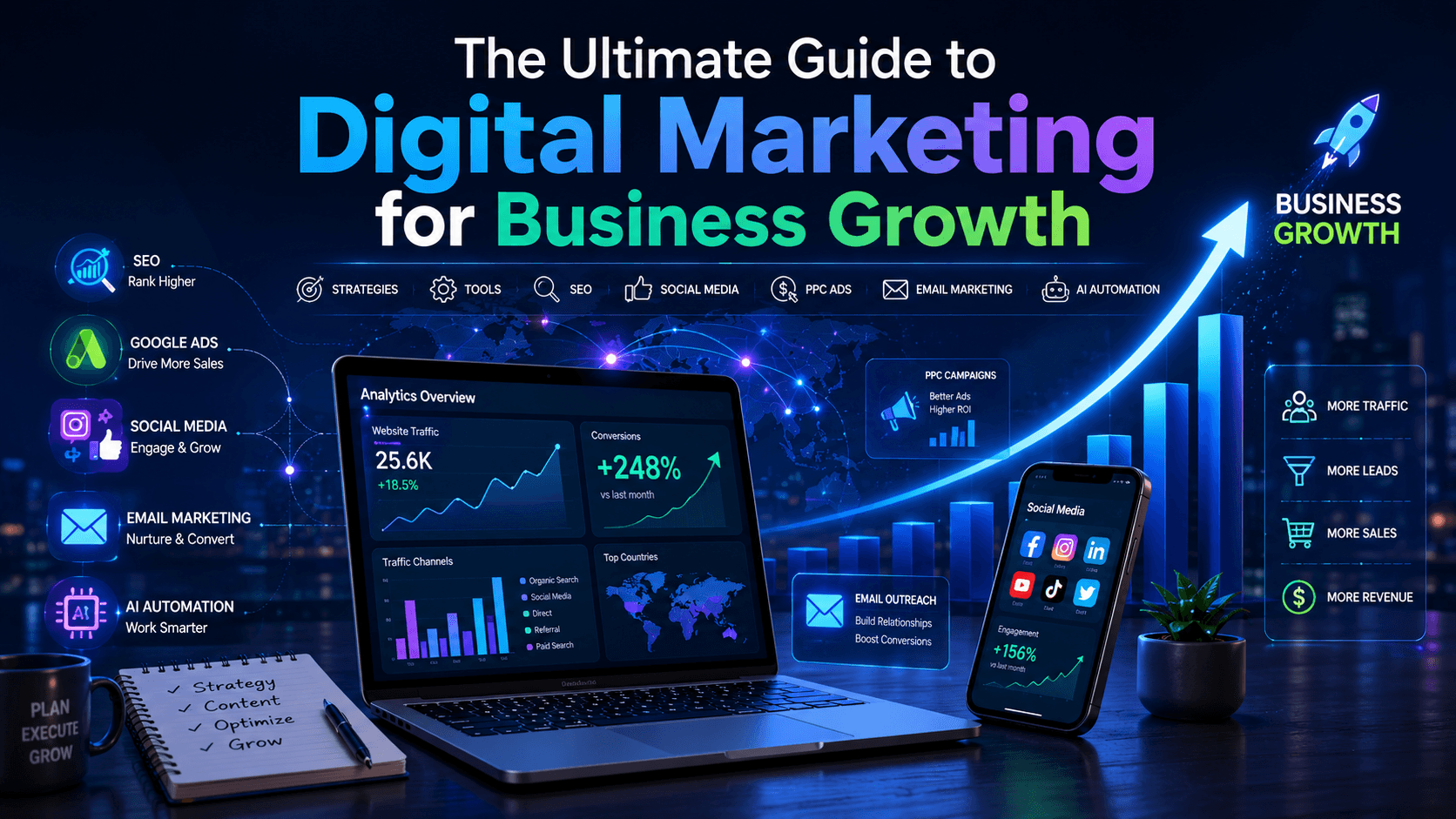
In today's digital-first world, businesses can no longer rely solely on traditional marketing methods to attract customers. With billions of people using search engines, social media platforms, and online marketplaces every day, digital marketing has become one of the most powerful ways to grow a business.
Whether you're a startup, a small business, or an established enterprise, a well-planned digital marketing strategy can help you reach the right audience, increase brand awareness, generate qualified leads, and boost sales.
In this guide, we'll explore the key components of digital marketing, why it matters, and the best strategies businesses can use to achieve sustainable growth.
What Is Digital Marketing?
Digital marketing is the practice of promoting products or services using online channels such as search engines, social media platforms, email, websites, and paid advertising.
Unlike traditional marketing, digital marketing allows businesses to measure campaign performance, target specific audiences, and optimize strategies based on real-time data.
Some of the most popular digital marketing channels include:
Each channel plays a unique role in helping businesses attract and convert potential customers.
Why Digital Marketing Matters for Business Growth
Businesses of all sizes benefit from digital marketing because it provides measurable, cost-effective, and scalable solutions for reaching customers.
Some of the biggest advantages include:
Reach a Larger Audience
Your potential customers are searching online every day. Digital marketing helps your business appear where your audience spends most of their time.
Generate Quality Leads
Instead of marketing to everyone, digital campaigns allow businesses to target people based on interests, location, age, behavior, and search intent.
Improve Brand Awareness
Consistent online visibility builds trust and recognition, making customers more likely to choose your business over competitors.
Increase Sales
A well-optimized marketing strategy attracts qualified visitors who are more likely to convert into paying customers.
Measure Every Result
Digital marketing provides detailed analytics that help businesses understand what's working and where improvements are needed.
Essential Components of Digital Marketing
1. Search Engine Optimization (SEO)
SEO helps your website rank higher on Google and other search engines, making it easier for potential customers to find your business.
A strong SEO strategy includes:
Keyword research
High-quality content
Technical SEO
Mobile optimization
Fast website speed
Quality backlinks
Local SEO optimization
SEO delivers long-term organic traffic and remains one of the highest-return marketing investments.
2. Content Marketing
Content is the foundation of every successful digital marketing strategy.
Businesses can attract and educate customers by publishing:
Blog articles
Case studies
How-to guides
Whitepapers
E-books
Infographics
Videos
Helpful content builds authority, improves SEO rankings, and increases customer trust.
3. Social Media Marketing
Social media platforms allow businesses to connect directly with their audience.
Popular platforms include:
Facebook
Instagram
LinkedIn
TikTok
X (formerly Twitter)
YouTube
Successful social media strategies focus on:
Educational content
Brand storytelling
Customer engagement
Community building
Paid promotions
Video content
4. Pay-Per-Click (PPC) Advertising
PPC advertising helps businesses generate immediate traffic by displaying paid ads on search engines and social media platforms.
Popular PPC platforms include:
PPC is ideal for:
5. Email Marketing
Email remains one of the most effective ways to nurture leads and retain customers.
Businesses use email marketing to:
Automation makes email marketing even more effective.
6. Video Marketing
Video content continues to dominate digital platforms.
Businesses use videos to:
Demonstrate products
Explain services
Share testimonials
Publish tutorials
Increase engagement
Short-form videos, webinars, and live streaming are especially effective for capturing audience attention.
Building an Effective Digital Marketing Strategy
A successful digital marketing strategy starts with clear planning.
Define Your Goals
Identify measurable objectives such as:
Understand Your Audience
Research your ideal customers by analyzing their:
Age
Interests
Buying behavior
Challenges
Online habits
Choose the Right Channels
Not every business needs every marketing channel.
Select the platforms that best match your audience and business goals.
Create Valuable Content
Focus on solving customer problems instead of only promoting products.
Educational content builds trust and encourages long-term relationships.
Monitor Performance
Track important metrics like:
Use these insights to improve future campaigns.
Common Digital Marketing Mistakes to Avoid
Many businesses waste marketing budgets because they:
Ignore SEO
Publish inconsistent content
Target the wrong audience
Focus only on selling
Skip website optimization
Fail to analyze campaign performance
Ignore mobile users
Avoiding these mistakes can significantly improve your marketing results.
Emerging Trends in Digital Marketing
Digital marketing continues to evolve with new technologies and customer expectations.
Businesses are increasingly adopting:
Artificial Intelligence (AI)
Marketing automation
Voice search optimization
Personalized customer experiences
Interactive content
Data-driven decision-making
Short-form video marketing
Companies that embrace innovation are better positioned for long-term success.
Why Businesses Should Invest in Professional Digital Marketing Services
Managing digital marketing requires expertise, time, and continuous optimization.
Working with experienced professionals helps businesses:
Save time
Improve ROI
Generate quality leads
Increase search engine rankings
Build stronger brand awareness
Stay ahead of competitors
A professional digital marketing partner can create customized strategies that align with your business goals and industry.
Final Thoughts
Digital marketing is more than just promoting products online—it's about building meaningful relationships with customers, creating valuable experiences, and driving measurable business growth.
By combining SEO, content marketing, social media, PPC advertising, email marketing, and data-driven strategies, businesses can increase visibility, attract the right audience, and achieve long-term success.
As technology continues to evolve, businesses that invest in smart digital marketing strategies today will be better prepared for tomorrow's opportunities.
 5 min read