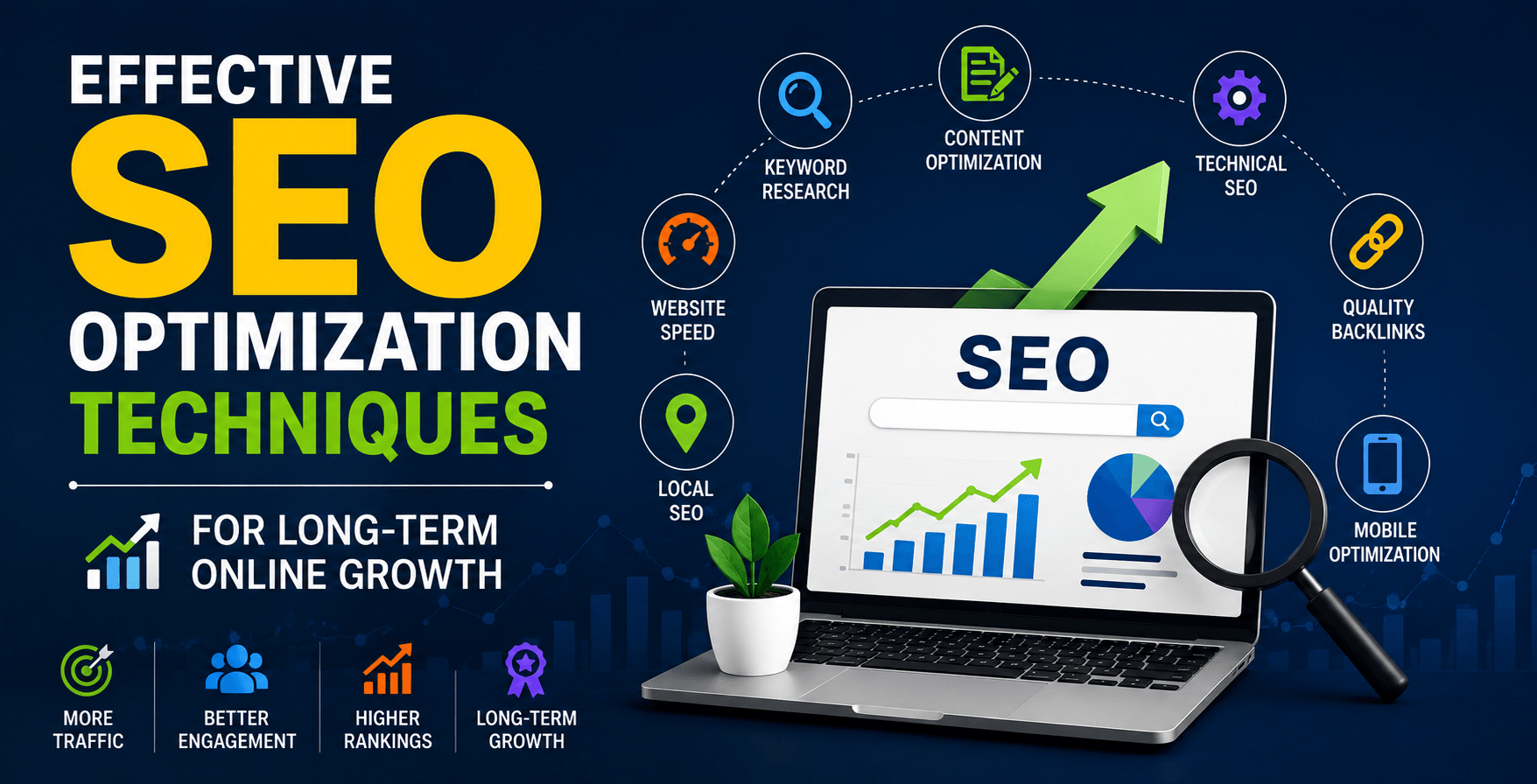
In a highly competitive digital marketplace, simply having a website is no longer enough. Businesses need to make sure their websites can be discovered by the right audience at the right time. This is where SEO optimization plays an important role.
Search engine optimization is not just about ranking for a few keywords. A successful SEO strategy involves improving website structure, creating useful content, targeting the right search intent, earning authority, and providing a better experience for visitors. When these elements work together, businesses can build sustainable organic visibility and generate long-term growth.
What Does SEO Optimization Really Mean?
SEO optimization is the process of making a website easier for search engines to discover and easier for people to use. It involves improving the website’s structure, content, performance, and overall relevance so that individual pages have a better opportunity to appear in front of users searching for related information, products, or services.
A strong SEO approach can involve several important areas, including:
Finding valuable search terms used by the target audience
Improving website pages and headings
Creating useful and original content
Strengthening the technical foundation of a website
Connecting related pages through internal links
Improving loading speed and website performance
Making pages work smoothly on mobile devices
Optimizing a website for location-based searches
Building authority through relevant external links
Creating a simple and user-friendly browsing experience
The real purpose of SEO optimization goes beyond increasing website visits. It is about bringing qualified people to your website who are more likely to engage with your content, contact your business, purchase a product, or use your services. When SEO is planned around both search engines and real users, it can become a powerful foundation for sustainable online growth.
Why SEO Optimization Is Important for Long-Term Growth
Businesses often invest in paid advertising because it can provide immediate visibility. However, advertising usually stops generating traffic when the budget is paused.
SEO works differently.
When a website builds strong content, authority, technical health, and search visibility, it can continue attracting organic visitors over an extended period.
Effective SEO optimization can help businesses:
Increase organic website traffic
Reach potential customers
Improve brand visibility
Generate qualified leads
Build online credibility
Reduce dependence on paid advertising
Increase website conversions
Establish long-term digital authority
This makes SEO an important component of a sustainable digital marketing strategy.
1. Start With Detailed Keyword Research
Keyword research is one of the foundations of effective SEO optimization.
Before creating content, businesses should understand what their target audience is searching for. Instead of choosing keywords based only on search volume, it is important to consider relevance, competition, search intent, and business value.
For example, a user searching for “SEO meaning” is probably looking for educational information. Someone searching for “SEO optimization services” may already be interested in hiring a service provider.
Understanding this difference allows businesses to create content that matches the user's actual needs.
Focus on Search Intent
Search intent generally falls into different categories, including:
Informational searches
Navigational searches
Commercial research
Transactional searches
Matching content with search intent can make pages more useful and improve their ability to attract relevant visitors.
2. Create High-Quality, Original Content
Content remains a major part of SEO optimization, but publishing more content does not automatically lead to better rankings.
The focus should be on creating content that provides genuine value.
High-quality content should:
Answer specific questions
Solve real problems
Provide original insights
Use clear and simple language
Include relevant examples
Be easy to scan
Match the user's search intent
Businesses should also avoid creating content simply to insert keywords. Search engines are increasingly focused on the usefulness and overall quality of content.
3. Optimize Important On-Page Elements
On-page SEO involves optimizing elements directly within a website.
Important areas include:
Page Titles
A page title should clearly communicate what the page is about while naturally incorporating the primary keyword when appropriate.
Meta Descriptions
A useful meta description can encourage users to click on your page from search results. It should accurately summarize the page and communicate its value.
Headings
Properly structured H1, H2, and H3 headings make content easier for both users and search engines to understand.
URLs
Short, descriptive URLs are generally easier to understand and share.
Images
Images should be compressed appropriately and use descriptive alternative text where relevant.
4. Improve Technical SEO
Even excellent content can struggle if search engines cannot properly access or understand a website.
Technical SEO focuses on the technical foundation of a website.
Important areas include:
Website crawlability
Indexing
XML sitemap
Robots.txt
HTTPS security
Broken links
Duplicate content
Canonical URLs
Mobile usability
Page performance
Regular technical audits can help identify problems before they negatively affect organic performance.
5. Improve Website Loading Speed
Website speed can significantly influence user experience. Visitors are less likely to stay on a website that takes too long to load.
Businesses should regularly evaluate website performance and optimize elements such as:
Large images
Unnecessary scripts
Heavy plugins
Browser caching
Server performance
CSS and JavaScript files
A faster website can create a smoother browsing experience and support better engagement.
6. Make Your Website Mobile-Friendly
A significant amount of online activity happens on smartphones. Therefore, websites must provide a consistent experience across desktop, tablet, and mobile devices.
A mobile-friendly website should have:
Mobile optimization should be treated as a core part of modern SEO rather than an optional improvement.
7. Build a Strong Internal Linking Structure
Internal links connect related pages within the same website.
For example, a company that publishes an article about SEO optimization could internally link to relevant pages about content marketing, technical SEO, keyword research, or SEO services.
A strong internal linking structure can help:
Users discover related content
Search engines understand website relationships
Important pages receive more internal authority
Visitors spend more time exploring the website
Internal links should be relevant and added naturally within useful content.
8. Earn High-Quality Backlinks
Backlinks are links from external websites pointing to your website. Relevant and trustworthy backlinks can help strengthen a website's authority.
However, successful SEO optimization is not about collecting hundreds of random links.
A better approach is to earn links through:
Original research
Valuable resources
Digital PR
Industry publications
Expert contributions
Relevant guest content
Partnerships
Shareable guides
The quality and relevance of links are generally more valuable than simply increasing the number of backlinks.
9. Optimize for Local Search
Local SEO can be extremely valuable for businesses serving specific geographic areas.
A local SEO strategy may include:
Optimizing the Google Business Profile
Maintaining accurate business information
Creating location-specific pages
Earning genuine customer reviews
Building relevant local citations
Publishing locally relevant content
For example, a digital marketing agency serving Faisalabad can create content and service pages that address the needs of businesses specifically searching for digital marketing services in that area.
10. Optimize Content for Featured Search Results
Search engines sometimes display direct answers, featured snippets, and other enhanced search results.
Businesses can improve their chances of gaining additional visibility by structuring content clearly.
Useful approaches include:
Answering questions directly
Using descriptive headings
Creating concise definitions
Using bullet points
Providing step-by-step instructions
Organizing information logically
The goal should always be to make information easier for users to understand.
11. Keep Older Content Updated
SEO optimization does not end after publishing an article.
Older content can lose relevance as information, trends, statistics, products, and search behavior change.
Regular content audits can identify pages that need:
Refreshing useful content can be an efficient way to maintain its value over time.
12. Focus on User Experience
Modern SEO goes beyond keywords and backlinks. The experience visitors have on a website also matters.
A good website should make it easy for visitors to:
Clear navigation, strong page design, useful information, and fast performance can all contribute to a better overall experience.
13. Measure SEO Performance
SEO optimization should be based on data rather than assumptions.
Businesses should monitor important metrics such as:
Organic traffic
Keyword visibility
Search impressions
Click-through rate
Conversions
Indexed pages
Backlinks
Engagement
Top-performing pages
Tracking these metrics helps identify what is working and where improvements are needed.
It is also important to remember that rankings alone do not define SEO success. A page ranking highly for an irrelevant keyword may generate traffic without producing business results.
Common SEO Optimization Mistakes to Avoid
Some businesses unintentionally limit their SEO performance through outdated or ineffective practices.
Keyword Stuffing
Repeating keywords excessively can make content unnatural and difficult to read.
Duplicate Content
Publishing similar or copied content across multiple pages can create confusion and reduce the uniqueness of your website.
Ignoring Technical SEO
A website with indexing, crawlability, or performance problems may struggle even when its content is excellent.
Buying Low-Quality Links
Cheap, irrelevant backlinks may provide little value and can create unnecessary SEO risks.
Creating Content Without Search Intent
Content should be designed around what users actually want to find.
Ignoring Analytics
Without measuring results, it becomes difficult to determine whether an SEO strategy is generating meaningful business growth.
How Long-Term SEO Growth Is Built
Long-term SEO success rarely comes from one major optimization. It is usually the result of many smaller improvements working together.
A sustainable SEO process looks something like this:
Research → Optimize → Publish → Promote → Measure → Improve → Repeat
Businesses that follow this process consistently can gradually strengthen their organic presence.
Instead of focusing only on short-term ranking changes, businesses should aim to build a website that becomes increasingly useful, trustworthy, technically strong, and authoritative over time.
Final Thoughts
Effective SEO optimization is a long-term investment in your online presence. It combines keyword research, valuable content, technical improvements, website performance, internal linking, backlinks, mobile usability, and continuous measurement.
The most successful SEO strategies are not built around manipulating search engines. They are built around understanding users and providing the best possible answer to their needs.
By consistently improving your website and creating content that delivers genuine value, you can increase organic visibility, attract qualified visitors, generate more opportunities, and establish sustainable online growth.
SEO may take time, but when approached strategically and consistently, it can become one of the most valuable sources of long-term traffic and business growth.
 9 min read